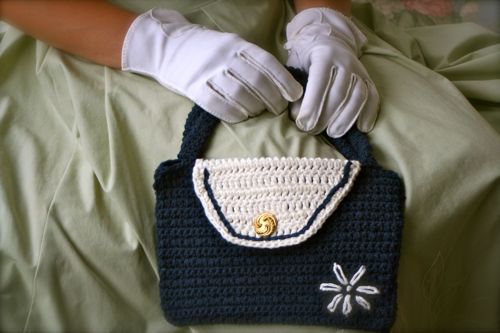
Welcome to Part Two of The Art of Wearing Gloves. (Scroll down to read Part One – types of and tips for wearing gloves.) In this post, we'll explore how to date vintage gloves, as well as how to care for and keep them properly.
Dating Gloves
Gloves older than the 1930s are hard to find, usually in very small sizes, and generally almost impossible to really wear because of their fragility.
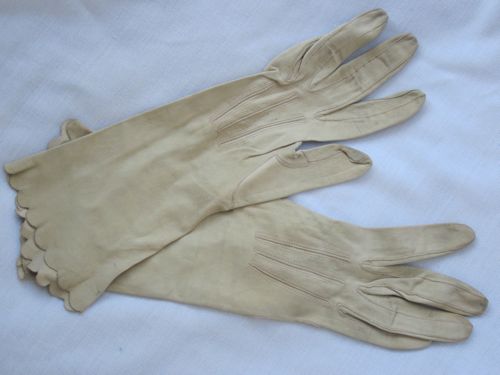
Pre 1930s gloves.
In this post we will concern ourselves with the 1930s-'60s since any pair of vintage gloves you can find in thrift or antique stores or on the internet, will very likely fall into this broad category. There are immense amounts of wearable vintage gloves available to someone who enjoys them. Sometimes they are stained, or the stitching is brittle, but it is not unusual to find a pair of new old stock – stuffed in a warehouse or basement for half a century – and still brand new, never worn, with a thread holding the pair together. This doesn't mean they'll be perfect, since rust, fading, and moths can still get to them. But if in nice shape, they will never have been worn.
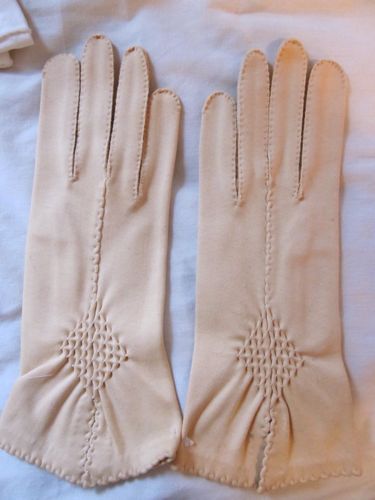
One of my pairs of still new gloves never had the thread holding them together broken.
These are just general guidelines per decade, for you to match your own gloves to. Sometimes the styles can cross over from one to the next.
The 1930s
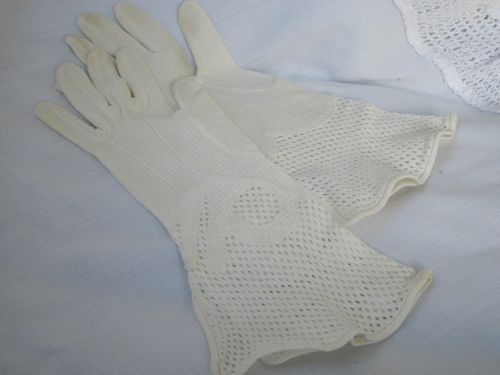
1930s gloves are usually recognizable by the fabric. These early gloves are often made of silk, thin kid leather, or a woven rayon blend fabric with some stretch, usually thin and limp, and feels old to the touch. They are fairly fragile and you have to be careful of the seams because thread is often brittle.
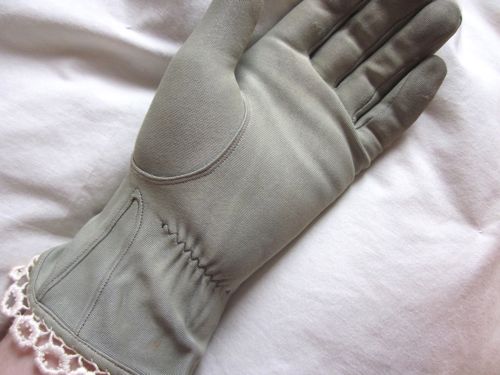
Fragile, limp, shiny fabric help me to date these c. 1930s gloves.
Lace gloves from this era were a mesh sort of fabric as shown above, not the machine sheet lace modern lace gloves are made from. Most times gloves from this decade have decorative cuffs and stitching on the back of the hand. Smaller sizes are most common, as with most old gloves. Take caution with buying gloves from this era and the 1940s without trying them on, since a size 6 1/2 from the 1930s or 1940s is much smaller than a 1950's size 6 1/2.
The 1940s

1940s gloves are frequently cotton, rayon, or leather (suede too), and rarely plain. Look for shirring, asymetrical cuff hems, buttons, decorative tabs and stitching, beading as shown in the next photo, etc. A favorite length for this era was mid-arm length, sometimes called bracelet length. Lace gloves are rarely worn, and they come in all colors. 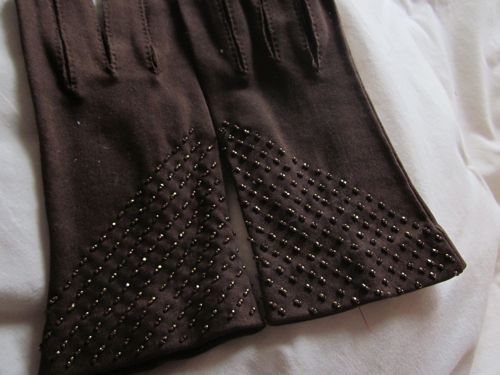
While the fabric will often feel sturdier than 1930s gloves, they still will not have the crisp cotton feel of cotton gloves of a later date. It is easier to find gloves from this era that fit modern hands, though they may be pricier.
You can often date a 1940s pair of gloves if they are stretchy by looking closely at the fabric. The early gloves from the '30s and '40s will have tiny ridges across the fabric, rather than the dense nylon of later date.
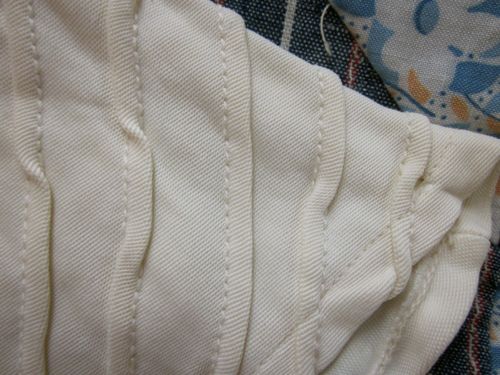
Look closely to see the tiny ridges in this early glove's fabric, which date it to be 1940s or earlier.
The 1950s
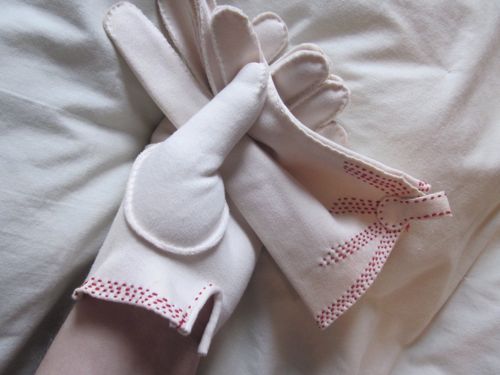
Very short gloves were popular in the 1950s, sometimes barely coming down over the heel of the hand as shown above, while long gloves were also worn of course for more formal occasions. Gloves from this decade were a little plainer than 1940s gloves, which makes sense since while fashions were severely tailored due to war rationing in the '40s, accessories like hats, wraps, and gloves were more ostentatious – while in the 1950s styles became more flowing and feminine, so the accessories became smaller and plainer. A very popular style from this decade are long gloves gathered with little stretches of elastic inside the arm.
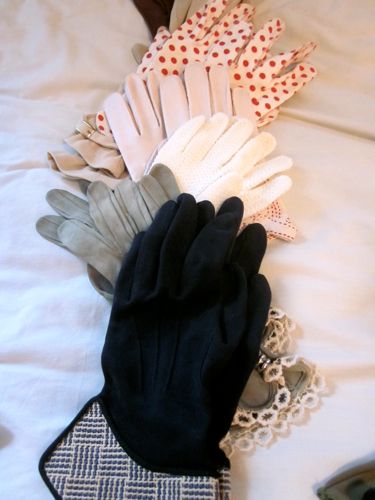
There are many, many gloves from this decade easily available, mostly in cotton and nylon which is sturdier and stretchier than rayon from the earlier decades. The cotton pairs will be of a heavier-duty cotton and be smooth and dense. Lace gloves became more popular again for formal wear, so if you find lace gloves neither modern nor from the '30s, they are likely to be from the 1950s.
The 1960s
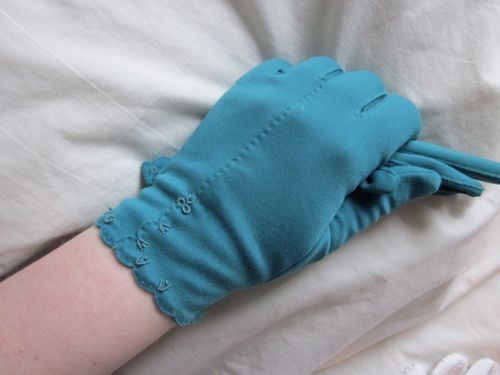
Gloves from the 1960s are apt to be of common nylon and more likely to easily fit your hand as a result. The gloves more often look machine made and are less a statement of style or workmanship. More vibrant and unusual colors became fashionable then as well. Gloves from this decade are usually in good shape with fabric and stitching intact and quite wearable. Sheer nylon gloves are most likely from this decade.
Storing
Especially for a glove collector who spends a fair amount of money on gloves, caring for them is important – particularly the few that are unique or hard to replace.
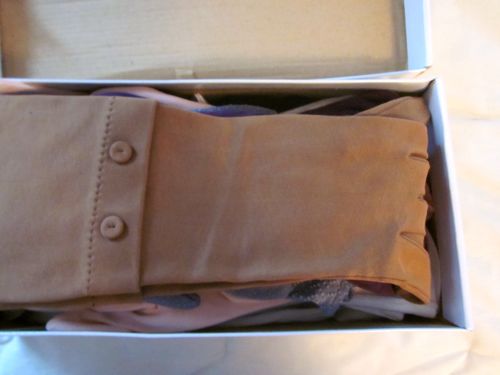
Store gloves flat and out of the light, since they will fade. If long gloves are too long for your receptacle, fold the finger end down to make it fit, rather than the wrist end. The reason for this is that wrinkles on the arm are more noticeable than wrinkles on the fingers, which will have creases from flexing your fingers anyway.
If you can find glove stretchers, they can be useful for inserting in your leather or suede gloves for storing. Nylon and lace gloves will not need stretchers, and cotton ones rarely do.
Cotton or nylon sturdy gloves can be ironed on low settings if needed. Never iron leather, silk, or rayon gloves.
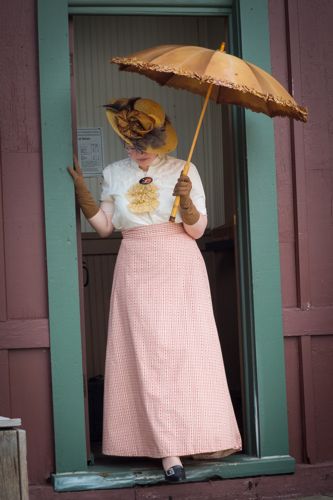
But the main way to care for your gloves is to wear them! Even if they are carefully kept in a dark drawer, like other vintage fabrics, they will lighten along the creases with long disuse and fold marks cannot be removed. So get them out and wear them – give them some air and exercise!
Cleaning
Leather and silk gloves should be professionally cleaned, although if a leather glove is stated "washable leather" or "guaranteed washable" spot cleaning it might work. Laundering cotton and nylon gloves, especially cotton, is difficult. They often do not do well in the washing machine, so if you wash them, wash them by hand. It's hard, especially with white gloves, to keep the fingers stain-free – one reason why plenty of white gloves were considered a luxury, and colored ones are my preference when going anywhere I might have to handle dusty items (i.e. antique shopping). Nylon gloves from the '50s and '60s wash better but will pill quickly, especially on the fingertips.
Not all stains will come out of vintage gloves, either. Rust spots are practically impossible to remove without damaging the fabric. If there is just one spot that needs cleaned, try spot cleaning using a solution – women back in the day used benzine – or if washing is necessary, don't make the whole glove wet. Soak the part well, then work on scrubbing with a laundering soap and a soft toothbrush. If white gloves become too gray at the fingers and won't wash out, consider dying them (a fun, addictive way to give stained or blah vintage gloves a new life – tutorial coming soon!) or try a bleach solution. Bleach cannot be used where there is color or colored trim, however, but I've read that Rit Whitener & Brightener can, and I intend to try it to freshen some of my white gloves with dingy fingers and will update when I do.
Thankfully, if all else fails gloves are easy enough to find that, unless unusual, they can be cheaply replaced if necessary.
Creatively Repairing
Often vintage gloves need just a bit of TLC. Mending is very useful for keeping them wearable. Usually if a glove gives out it is at the seams. Old thread will break much sooner than old fabric will give out. Darning fabric is difficult and should only be attempted if the gloves are special and the hole is small. However, lace gloves can often be darned successfully. To do this, use matching thread and weave back and forth from one side of the hole to the other, filling up the gap and pulling it together.
These gloves have outside seams.
The easiest kind of glove to mend at a seam is a glove with outside seams in matching thread. Just match the thread and sew up the hole. I use a double thread because of the amount of stress. If the seams use some sort of decorative stitch and need repaired, find a friend who has some embroidery skills to help you copy the stitch. To mend a glove with inside seams, turn that finger or part inside-out and sew it like you would any other seam – probably by hand unless it's a nice straight, easy to get at area.
Sometimes if a glove is stained or has a hole in the fabric, it can be altered. If you have some sewing skills, it might be possible to cut out the part with the stain or hole, and insert another color of fabric or stretch of lace. Decorations are also used to cover up defects. If one glove has a stain on the back of its wrist, you can easily make up lace medallions or even use vintage brooches and pin or sew them on the back of each glove. Only you know that one of them hides something!
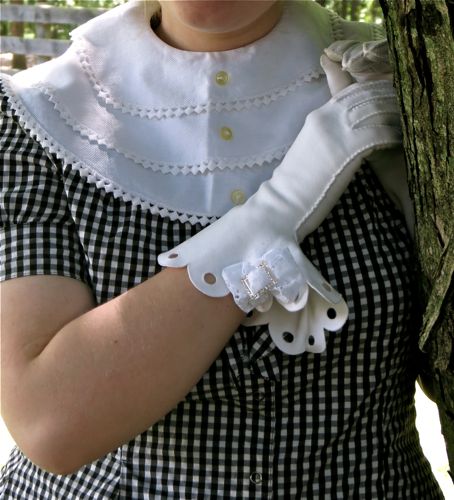
I did something similar to that with this pair of gorgeous gauntlets pictured above, one of which had a splash of gray paint on the cuff that could not be removed. I made matching bows with rhinestone brooches and some lace, and pinned one over the paint to hide it, pinning the other on the good glove to match. With using brooches, I can take them off and do something else when I wish.

Any Questions?
Wearing gloves is fun and elegant, as well as sanitary. It can be a creative outlet or a fashion statement, adding a perfect touch or color tie-in to an outfit. There are so many beautiful pairs out there, I like to wear them whenever I find an excuse. But even only for costume wear, it can be helpful to read about the different types, etiquette, and eras.
Hopefully I have interested you in the fascinating business of wearing and collecting gloves. If I've missed anything in my overview, just drop me a line. I'd be happy to answer your questions.

Thanks for reading The Art of Wearing Gloves!


 Verity Vintage Studio
Leave a reply to Lisa Cancel reply