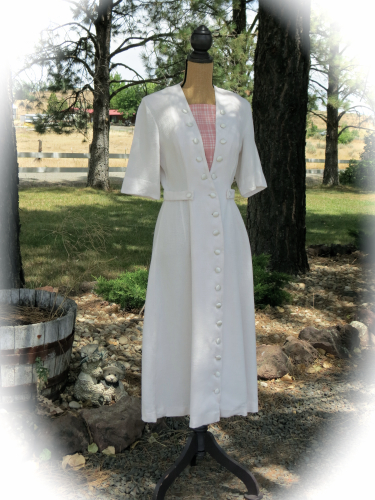
I've had a white dress in mind to make for a long time. A classic white summer dress, no matter in which decade, is such a staple in a vintage wardrobe and I had none. So when I bought this Spadea pattern, it went to the top of my sewing queue.

And I envisioned it in white, or off white, with a contrasting front panel. So I pulled out some loose-weave linen from the stash, and spent some time in a leisurely way putting the dress together.
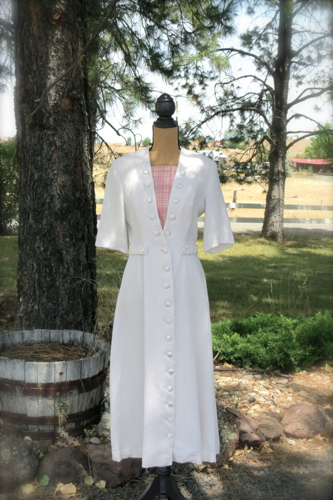
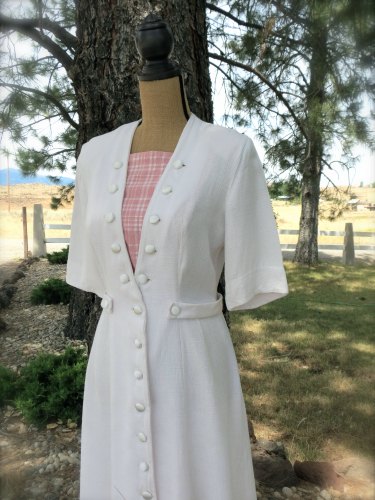
It was one of those projects that goes together quickly then takes a while to finish. It was really interesting to put together, with princess seams in the back, and a darted panel inserted in the side front.
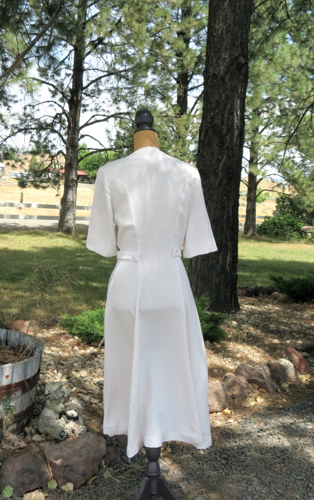
The facings were so easy, with a button-up dress like this. But there were so – many – buttonholes to make! And it was a covered button lover's dream project. The fabric was way too easily frayed to cover the buttons, so I went with a white satin and really like the white-on-white look. (Yes, I know tithe dress looks a little baggy on the mannequin – but it's several sizes smaller than I am! 🙂
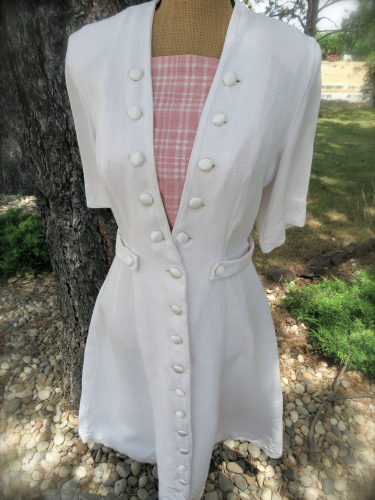
So much detail too, in such a simple, classic style. Besides the inserted panel, I love the little half belts that button on the sides. (Only I sewed them on to save making 4 more buttonholes!)

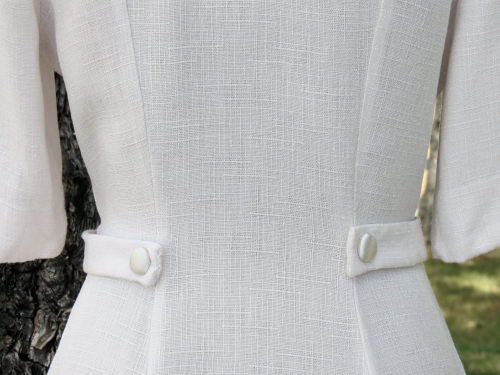
I like the way the weave looks on the fabric I used, but it is fairly heavy fabric and was a pain to work with because it frayed so easily. I don't know how I would have managed without the serger! So it probably is more of a spring dress than a summer dress, because of its weight.
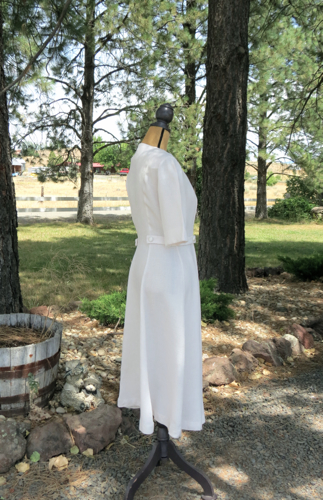
Of course I had to go a step farther and make panels that switch out, by just pinning on the buttons. I made a handful of them, one of them reversible, so I have a total of 5 different panels to button in the front of the dress.
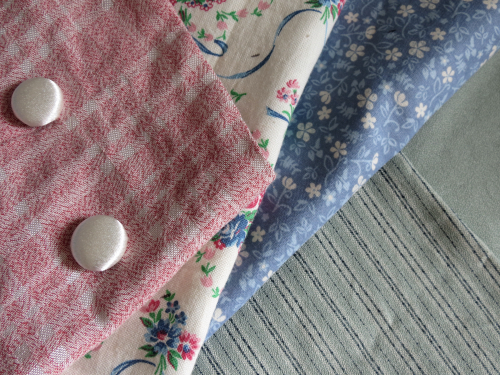
Just re-pin the buttons, and you've got a whole new look!

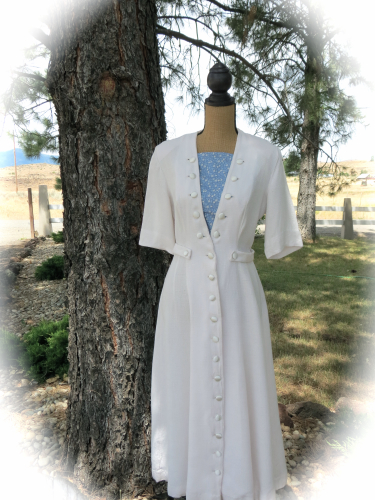
I enjoyed this dress, not hurrying over it, and working on it a bit at a time, especially once it reached the handwork stage. It was my first Spadea pattern, so I didn't rush it. The only trouble I had with it was a little bit of fitting issues – the princess seams are easy to adjust, but the panels ended up a little too wide after I'd made the dress a little smaller, so the facing doesn't hide the panel edges completely.
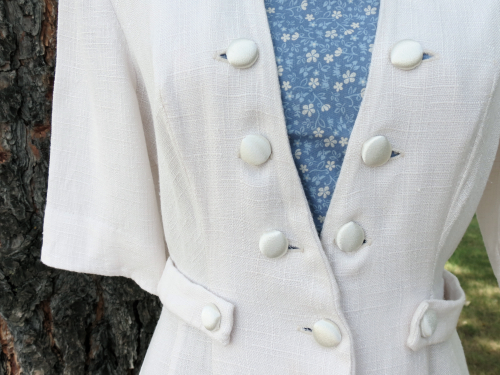
It's another example of how simplicity is often the most elegant option, and how understated can still be ultra-feminine and classy.


 Verity Vintage Studio
Leave a comment