Partly because March is craft month, and partly because of spring air or something that gave me lots of ideas, I'm doing a Tutorial Blast this month, with a new and different tutorial every week instead of just the first week of the month. Check back each week to see what's new! Week One: How to Make a Cottage Chic 1950s Gloveholder. Week Two: Dyeing Vintage Accessories. Week Three: Flat Overnight Curlers. Week Four: How to Make a Retro Skirt from a Twin Sheet.

Recently I've been doing a lot of sewing using vintage fabric and patterns. It started out as a desire to make a 1940s costume for an upcoming party, then I found so many patterns online I wanted I had to buy some and make them.
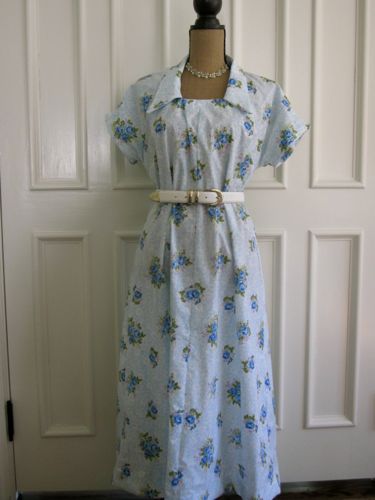
How much fun it is to see them come to life – and the options so endless! To see this pattern (McCall's 8723)…
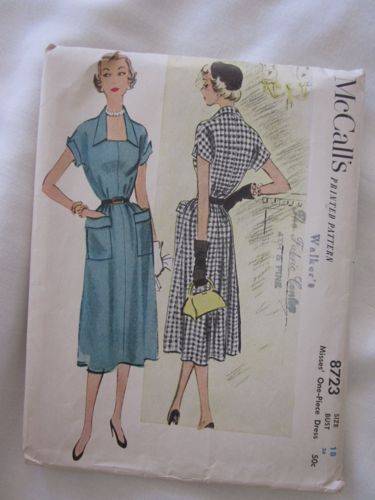
…become this '40s dress:
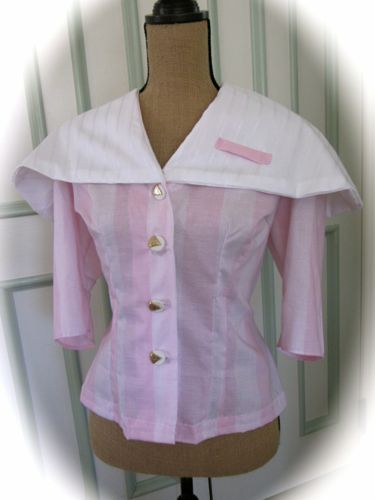
And the jacket of Simplicity 1602…
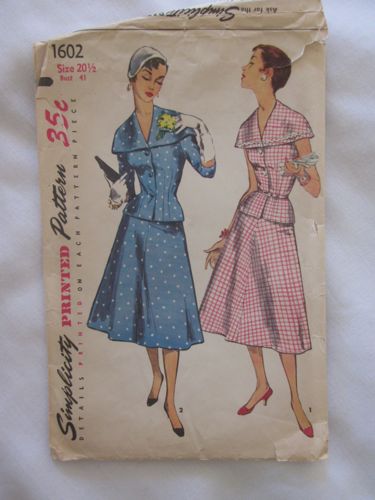
…look like this, using thin vintage muslin (the pink bar on the collar is a welt, for putting flowers in when wearing a corsage – I love the feminine touches on vintage styles!):
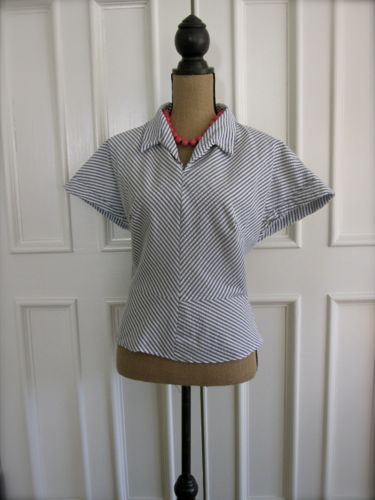
And of course I can always use a sailor style blouse from Simplicity 3288…
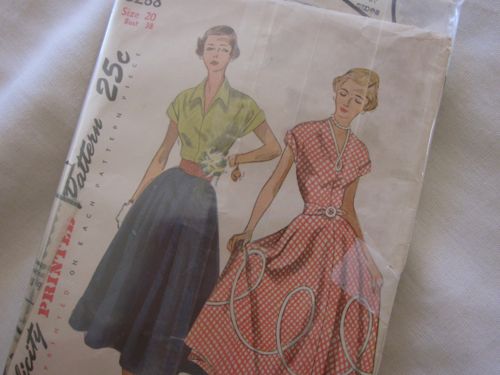
…in nautical seersucker stripes for the summer.
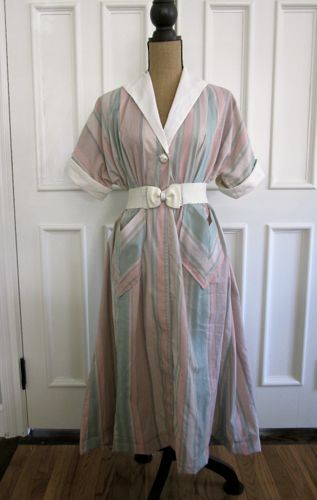
This 1950s duster (pattern Butterick 7140)…
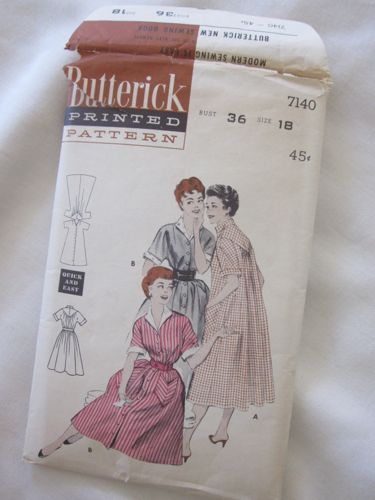
…is a great addition to my wardrobe, easy to make and perfect for comfortable house-wear.
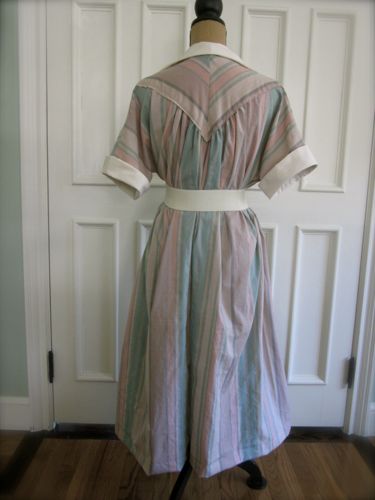
Of course I've had some difficulties, and had to make a few adjustments during the process – shorten a bodice, lengthen a skirt, skip the interfacing, put the sleeve in differently, etc – and have had some learning curves on facings and following vintage pattern directions, but it's been a fun adventure and I have lots more to cut out and sew.
However…
For those of you who don't like to sew or are confused by patterns, yet love vintage fashions, here's my favorite way to make a retro skirt in just 2 pieces, as easy as possible and perfect to customize according to size and inclination.
You'll need:
1 twin size flat sheet, preferably vintage
yardstick and measuring tape
sewing machine and accoutrements
pinking shears (or scissors)
needle and thread
8 in. zipper
pins
First, a word about sheets.
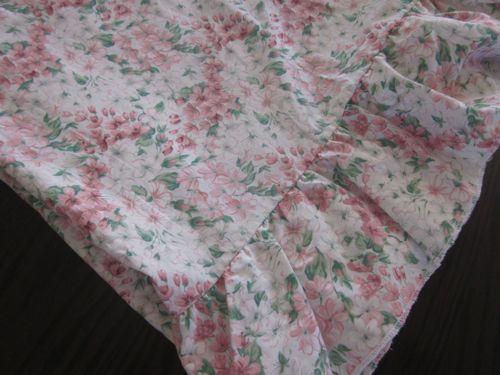
Sheets are the perfect fabric for making vintage outfits, because vintage sheets can often be found for a few dollars, compared to buying repro prints or other fabric new – and there is a lot of fabric in them. In the photo of the blue dress above, I used only about 3/4 of a twin size sheet for the whole dress. In a king size sheet, there is a lot of fabric. Even better, the fabric feels nice and is sturdier than most cotton blends today, rarely wrinkle, wash nicely, and have been worn in. You do have to inspect them to make sure there are no stains, thin spots, pilling, etc. Also if you have a sheet set, the sheets may differ slightly in shade thanks to fading. But for $2 who cares if you have to cut around a stain??
Back to the skirt in progress…
For this skirt, I recommend finding a sheet that has a decorative border or ruffling at the hem. Most skirts are cut on a flare, which means you can't use the decorative edge of the sheet, but this skirt is straight at the bottom so it's perfect for incorporating the edge. Plus that means it's already trimmed and hemmed, so you will have exactly 2 seams in the whole skirt!
Now, keep in mind that the width of the sheet will be the width of your skirt, and you will need it to be a narrower skirt (not a '50s style circle skirt, for instance) or else the straight bottom edge won't hang right. That means a twin sheet will be wide enough for sizes S-L, while larger sizes should probably go up to a full size sheet and cut a strip off the unfolded side if there is too much fabric.
Cutting the Skirt
I took my sheet and held it against me to determine how long I wanted it. If you have to hem it, allow a few extra inches for the hem, and you'll have to allow seam allowance along the top. I wanted mine to be about mid-calf, so I folded it against me until the hem was about to the length I wanted it when finished, looking in a mirror.
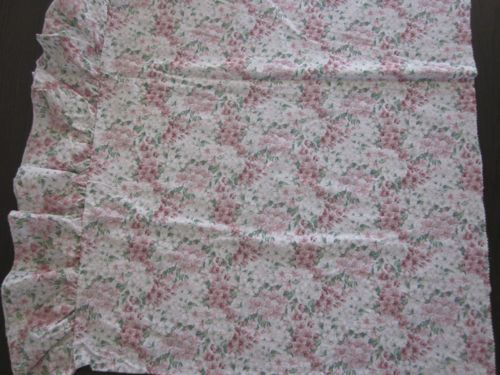
Fold it lengthwise. Lay it flat on the table. Cut it off straight at the length you want, using a yardstick to make sure you are cutting straight. My skirt piece was 33 in. from hem to cut edge.
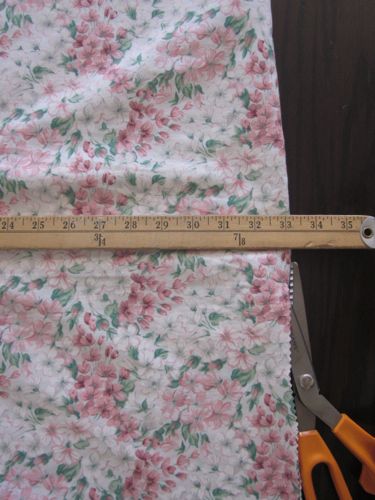
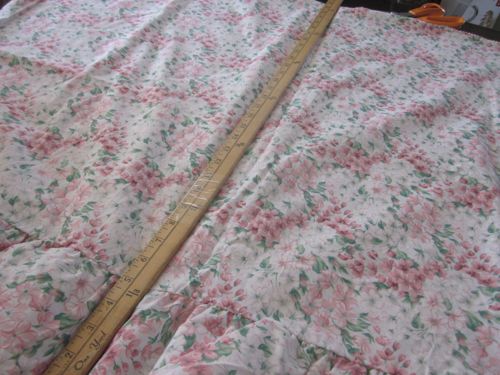
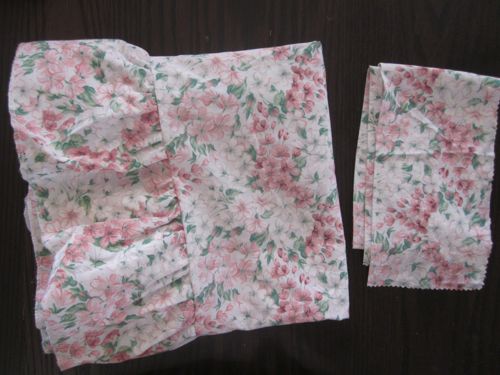
You're basically cutting the untrimmed end of the sheet off, leaving the top part as long as you want it. My finished skirt piece:
Lay it aside.
Cutting the Waistband
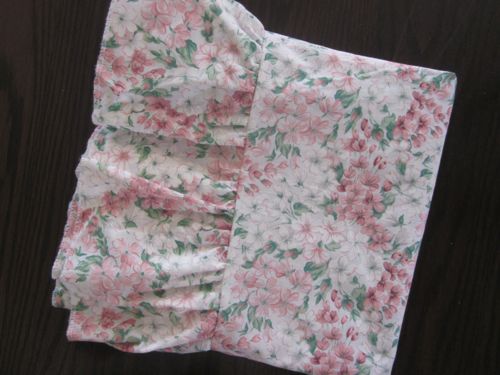
Out of the piece you cut off, cut the waistband. To do this, decide how wide you want it to be and multiply it by 2 + seam allowance. If I want a 2 in. waistband, I'll need to cut a strip about 4 3/4 in. wide.
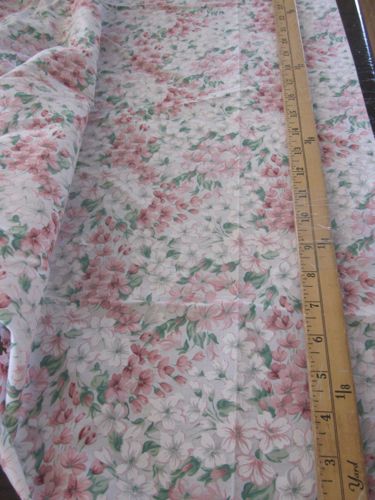
The length depends on your waist measurement. You want it to be comfortably snug around your waist, plus seam allowance. I usually cut the long edge of the strip and before cutting it off, hold it around me (preferably not overtop of a lot of thick clothing!) and pinch the ends to estimate seam allowance.

Here's my cut waistband.
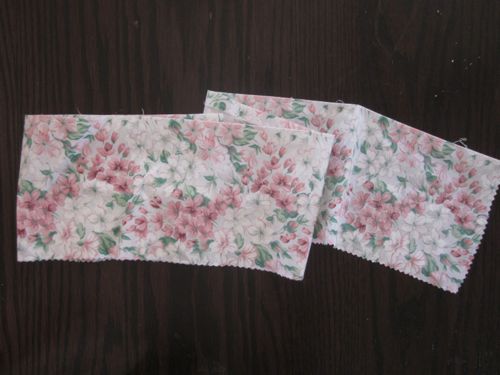
And here's how it will look when on the skirt, folded in half lengthwise.
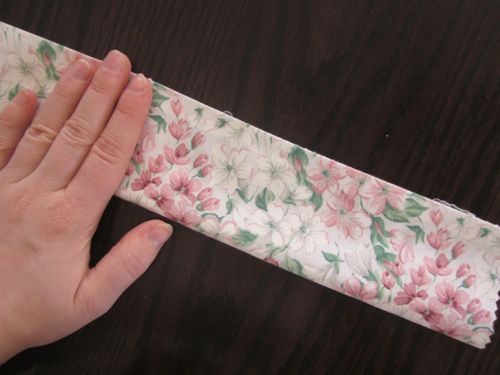
My favorite thing about waistbands cut from sheets is to cut it from the edge where there is a selvedge or hem, which means I won't have to hem it or turn it up and press it myself before whipstitching the free edge later on. This one was only turned up, but that works too. It's another shortcut, and I'm big on shortcuts! 🙂
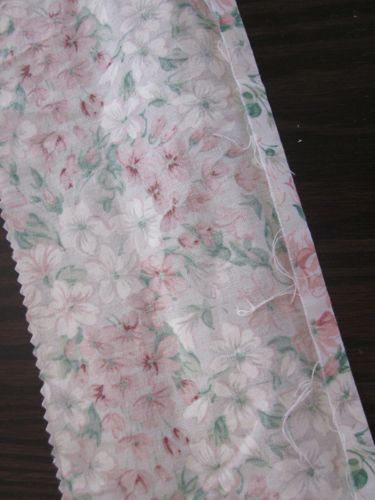
Now you have 2 pieces – the skirt and waistband.
Assembling the Skirt
Now is the time to choose your style of skirt. Since you don't have a right side seam, you can put more fabric in the back if you want, or divide it in half and work each half into half of the waistband for evenly distributed fabric. However you do it, you need to use up all the skirt fabric into your waistband.
I wanted mine to have a few pleats in the front and the rest of the fabric gathered in the back, smooth over the hips. But there's lots of different ways, and by folding and pinning, you can get a feel for what you want.
I really liked how this looked, with one large pleat in the center and 3 small ones on each side.

Let's see what that looks like on the mannequin, also pinning on the waistband:
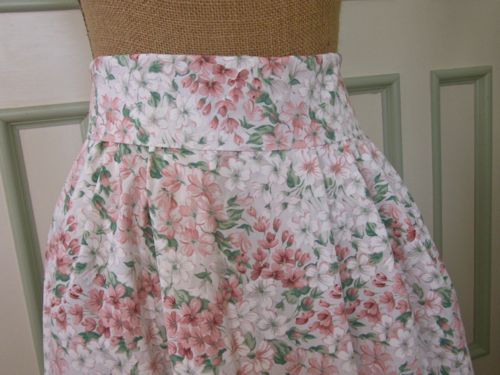
I like that.
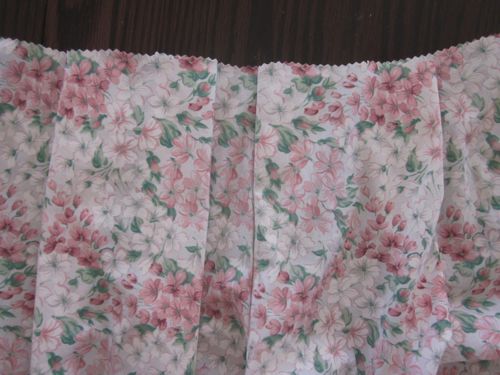
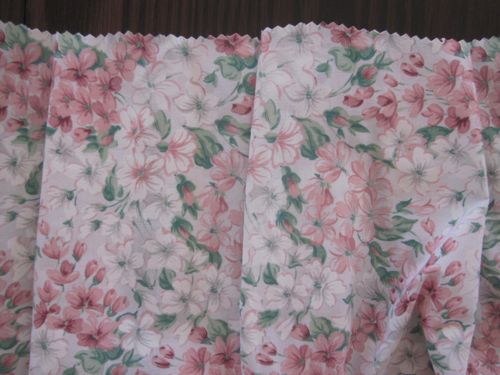
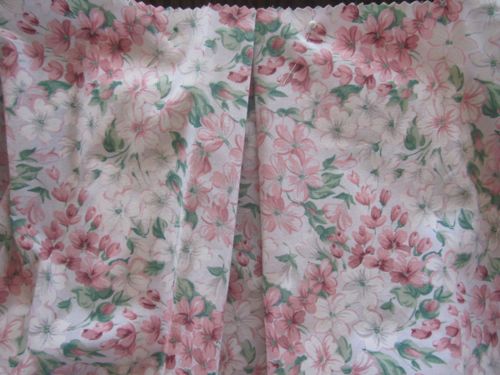
Here are some other ways you can use up the fabric. When you pleat, make sure you use a ruler to insure that they all have the same amount of fabric in them, are the same distance from each other, and are all the same size.
Box pleats:
Large pleats going the same direction:
An inverted pleat (a box pleat backwards):
When working on the front with the right side of the fabric facing me, I am working on the right end of the skirt fabric, because when wrapped around me I want the zipper seam to be on my left. So I did my pleating on the right end of the fabric.
So then I have about 2/3 of the fabric left. I measured from the pleat toward the rest of the fabric the same distance the first pleat was from the edge, and marked it with a pin. This marks the right side "seam". All the rest of the fabric goes in the back.
To gather it, I put my machine on the longest stitch and stitched 2 rows 1/4 in. apart, across the entire length of fabric I wanted to gather.
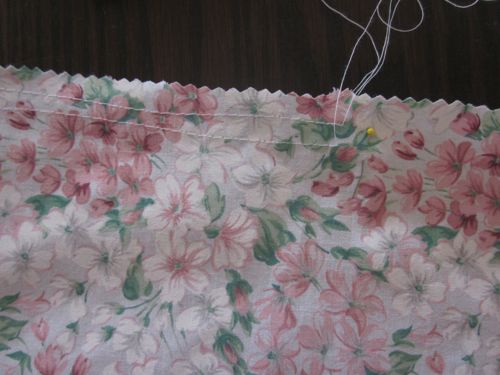
To gather, just pull steadily and carefully on the top threads. With a lot of fabric like this, you'll have to pull a little at a time and work it in toward the center. Keep measureing it against the waistband so you know how much to gather.
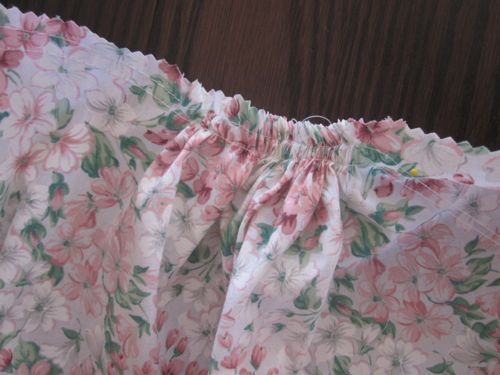
Mine had to be gathered fairly tightly before it would fit into the waistband.
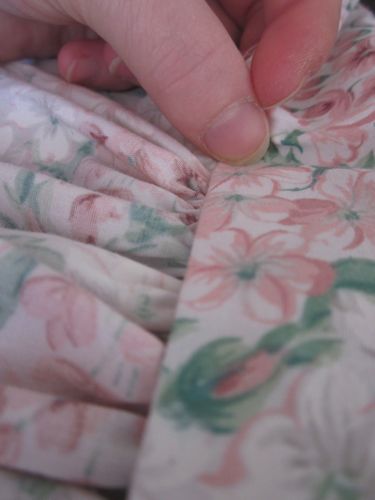
Gathering detail on the right side (with the waistband folded back):
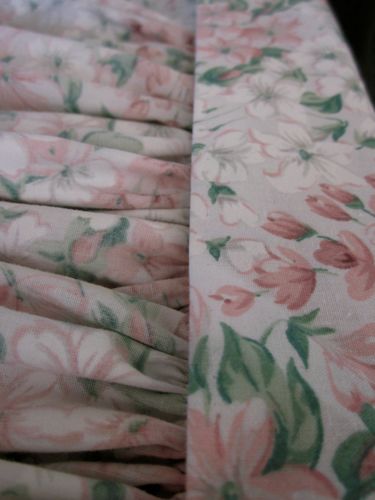
When it's gathered, I pinned it to the raw edge of the waist band, right sides together. For this picture I flipped the waistband up.
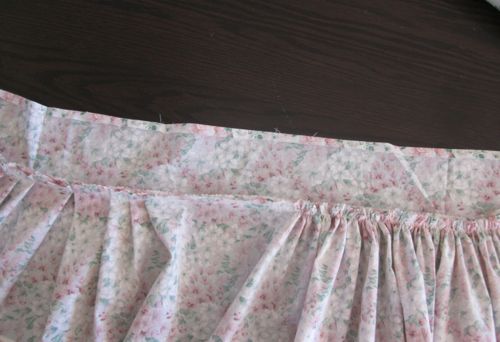
Here is how it will look on the outside when the waistband is sewn down. The pleats on the right are the front, the gathers on the left are the back.
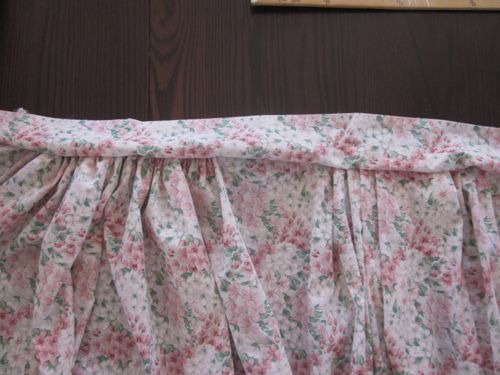
At this point I can carefully lift it up and wrap it around me or try it on the mannequin.
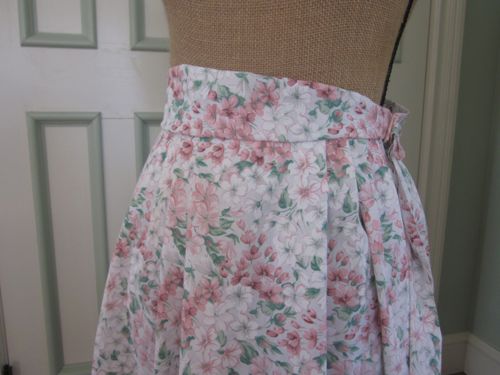
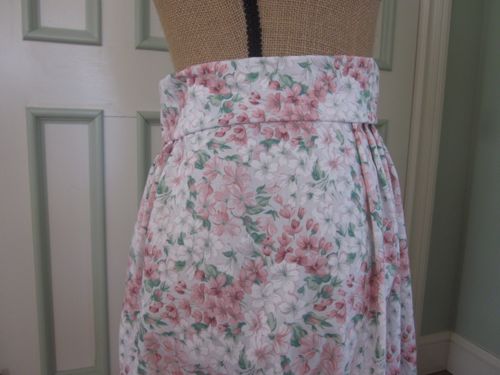
If it's all good, we go on to the first seam, which is securely stitching the waistband to the gathered-and-pleated skirt piece. Take out the pins and gathering threads when you're finished.
Here's what it looks like on the inside now:
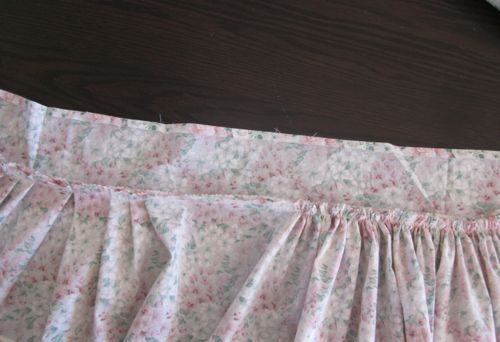
Next, fold the waistband over to the inside, just above the seam.

You'll need to stitch it by hand, and folding it just above the seam means you can stitch it without any thread showing through on the front, if you just catch the seam ends underneath.
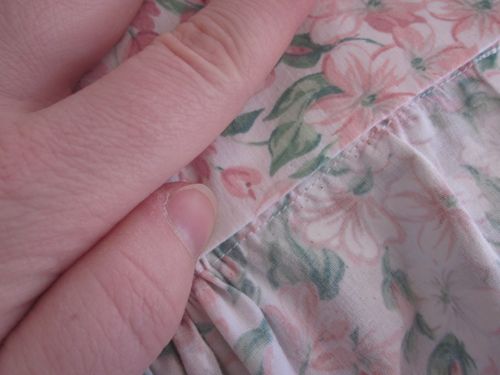
Whip-stitch it by hand, with your needle and thread.

To finish, all you have to do is bring right sides together, put in your zipper at the top (follow instructions on the zipper if needed) and finish stitching the side seam. If you have a decorative edge at the bottom like mine, it's done! No hemming or anything. (But this particular one just had a serged edge on the ruffle, so I did turn it up 1/2 in. and stitch it.)
Give it a good pressing, and it's done. With a little practice you can make one in an hour or less.
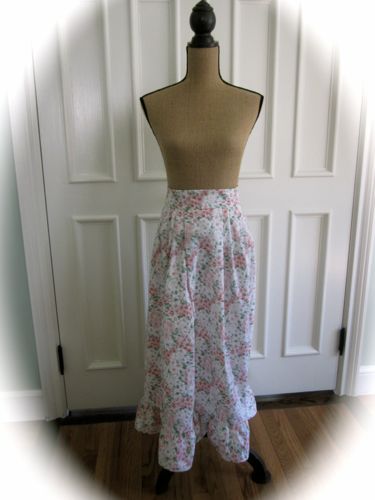
Front:
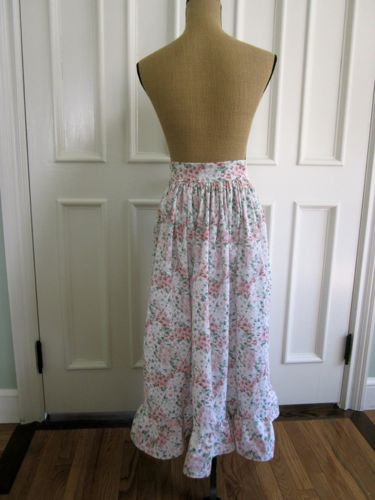
Back:
Side:
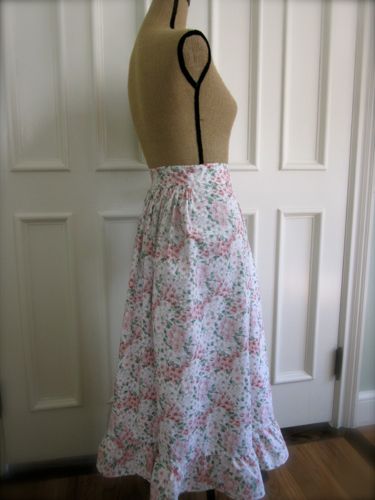
I like how it looks more tailored in the front, but has plenty of fullness in the back. Not quite like a bustle, but similar.
If you are looking for a Period skirt, really pay attention to your print on your fabric; try making the skirt shorter and tailored (plain hem with maybe a decorative border rather than a ruffle) for a WWII 1940s outfit, longer and fussier for a New Look (late '40s-early '50s) costume, a little shorter than mid-calf length and either tailored or fussy for a 1950s look.
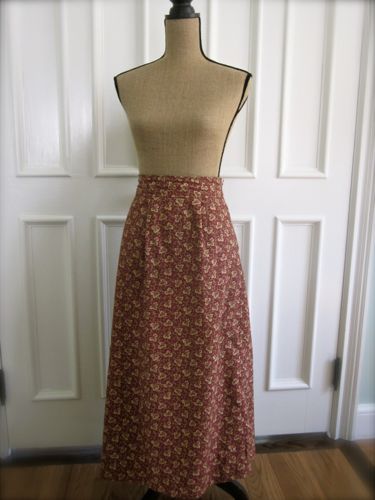
This method also works for large pieces of fabric folded in half, only you have to allow for and stitch a hem. I used this straight-cut style style with this wide duck cloth I made into a tailored '50s style skirt.
(Keep in mind the straight cut will only work for skirts on the narrower side. Wider skirts, to hang right, will have to be cut on a flare.)
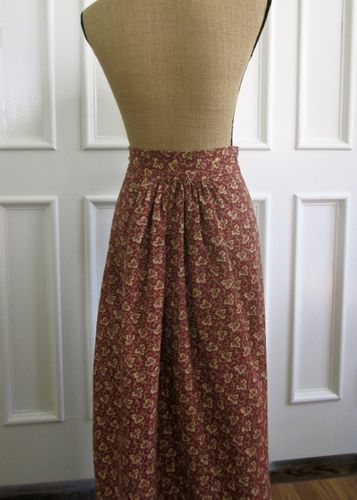
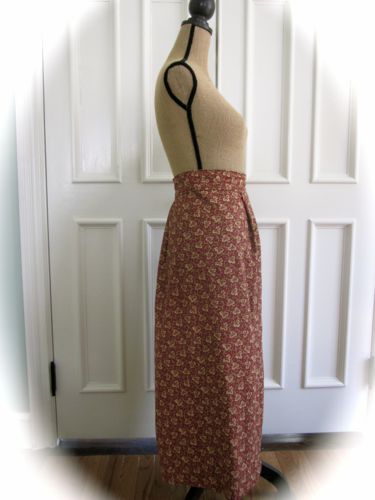
As I said, there is lots of room for customization. Add lace or rick-rack above the hem or buttons down the front, appliques, embroidery, or contrasting waistband. If you're experienced, try inserted lace or hand ruffled ribbon for trim. Experiment with gathers and pleats and skirt lengths. Never pass up a pretty vintage sheet with a striking border! With 2 pieces of fabric and 2 seams to sew, it's easy. And it's fun!
Happy Sewing!
~Kristen – Verity Vintage Studio

 Verity Vintage Studio
Leave a comment