Partly because March is craft month, and partly because of spring air or something that gave me lots of ideas, I'm doing a Tutorial Blast this month, with a new and different tutorial every week instead of just the first week of the month. Check back each week to see what's new! Week One: How to Make a Cottage Chic 1950s Gloveholder. Week Two: Dyeing Vintage Accessories.
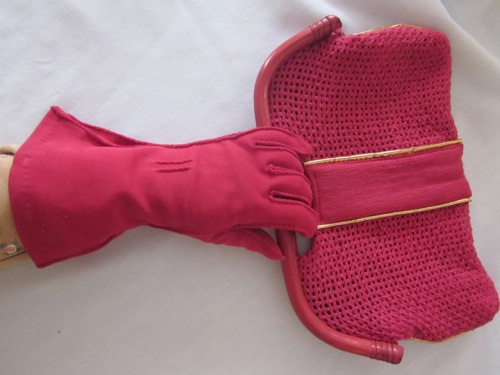
When I stumbed across a blog post about how easy it is to dye things, I was instantly interested – mostly because of my large collection of vintage gloves. White gloves stain so easily, yet if they have really neat cuffs or ruffles, I hate to part with them. To give them new life was exactly what I wanted – and is Period correct, too. And to be able to quickly make a pair to match any color for any outfit (not to mentioned dye my own colors more expensive to buy vintage) was perfect!
So I jumped into dyeing with both feet and bought a bunch of Rit Dye.
It truly is very easy.
How much fun it is to turn these…
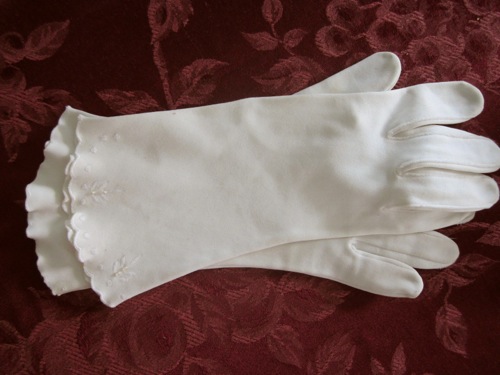
…to these!
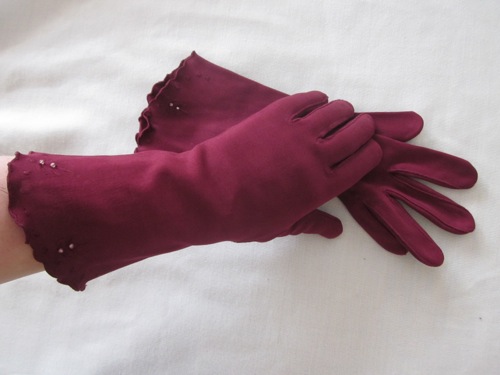
This pair was originally white.
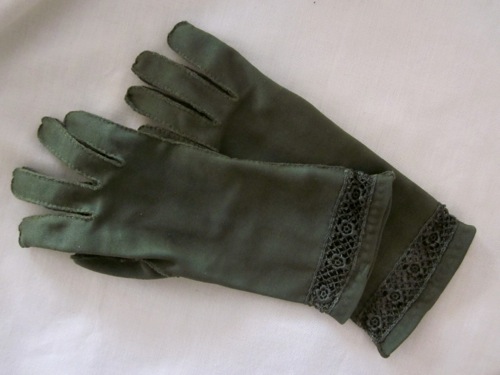
These were originally ivory, and very stained. I had wanted a pair of dark green gloves for a long time and couldn't find one, so now I have them with hardly any expense!
Dyeing in General
There is much to be said about dyeing. Tutorials abound, with lots of proponents for different methods. I think the most important thing is to not expect exact results. It is extremely hard to pinpoint a color, so to take what comes is usually a pleasant surprise for me. The amount of dye used per amount of water, and the length of time the items soak can really make a difference with the finished color. To make it harder, the colors are always darker when wet, so you have to wait until the item is many shades darker than the approximate shade you want before it is finished.
The original shade of an item will make a difference in color as well, because it's already an ingredient when you over-dye it. The blue jacket below would have been a brighter blue if it had been ivory instead of tan since the tan influenced the blue dye into a periwinkle.
There are many different methods – washing machine for large items, sink or bowl or bucket method, or stovetop. Search for details to see what works for you. I haven't tried the washing machine method, but for small items a stainless steel bowl works perfectly. I used one side of our stainless steel sink to turn this jacket…
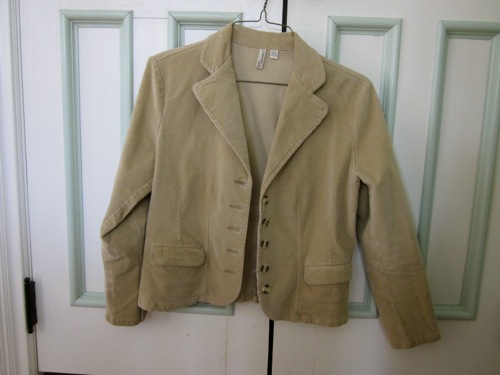
…to this.
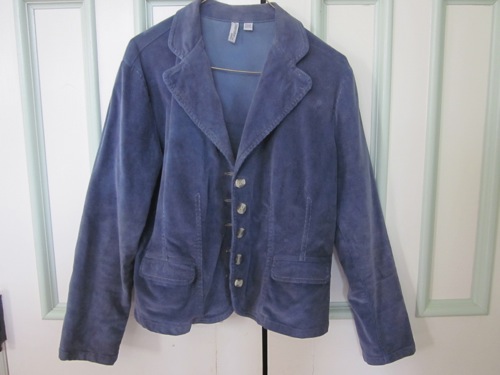
Polyester and plastic do not dye, so the seams and buttons did not change.
Cotton and nylon dye the best, but nylon takes the color differently. When I did 2 pairs of cotton gloves and 1 pair of nylon gloves in the same bowl of dark gray dye, the cotton gloves came out dark gray and the nylon gloves a smoky blue! Nylon gloves in the same dye that did the burgundy gloves above, came out purple. They say to use salt in dye baths with cotton, and vinegar in dye baths with nylon to help fix the color, so perhaps that was my problem.
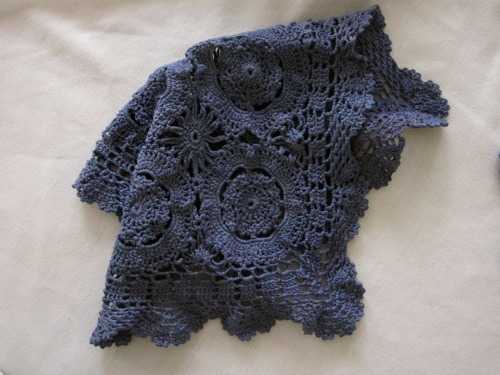
These cotton doilies took the dye nicely.
Before:
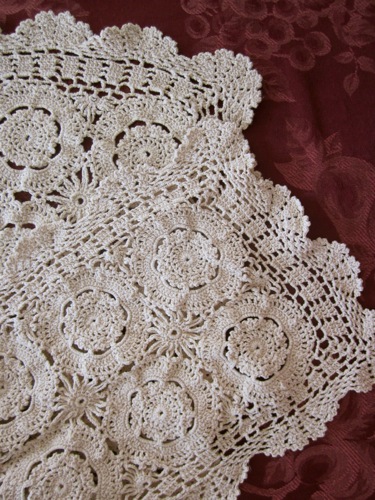
After:
So now that you're inspired, I'll walk you through the steps of dyeing using the bucket (or bowl) method.
Dyeing
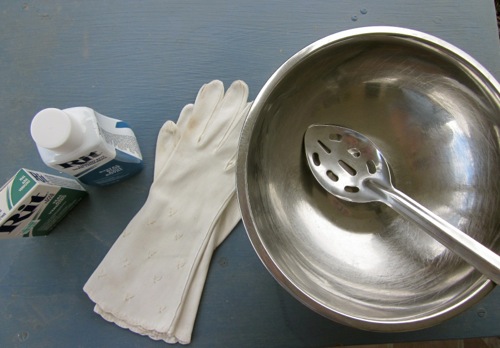
You'll need…
dye (this is a great place to find what dye "recipes" make the shade you want)
gloves (white or off-white work best)
stainless steel bowl
stainless steel spoon
salt (optional)
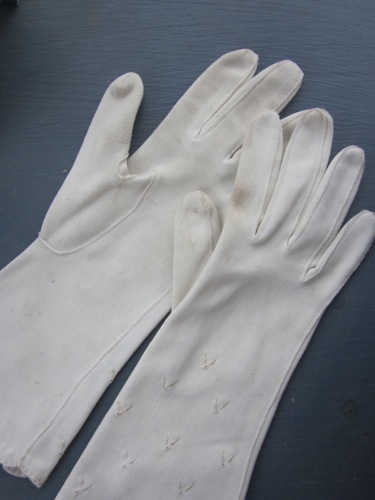
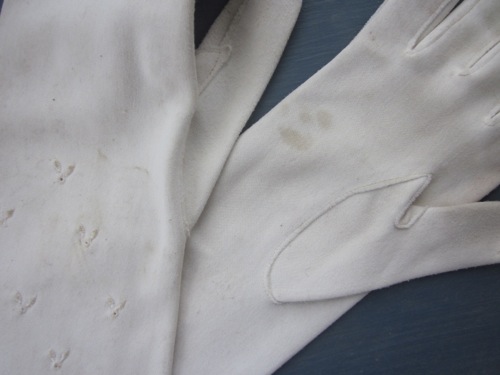
These cotton gloves were kind of blah and very stained and dirty. As white gloves I wouldn't have wanted them. But as dyeable articles, they turned from another woman's junk into my treasure!
I wanted them to be a brightish shade of light blue. These are the two dyes I mixed.
Rit dye is the most available dye and fairly cheap. It comes in two kinds – powder and liquid. I would heartily recommend the liquid. You don't have to worry about it dissolving, it's easier to handle, no dye-dust to fly around to breathe, and won't get your fingers stained just opening the package.
Dye doesn't smell too good, so do it in a ventilated place or – like my photos show – outside.
Now, for the details.
1. Fill the bowl with enough very hot water (mine just finished boiling) to swim the gloves in comfortably.
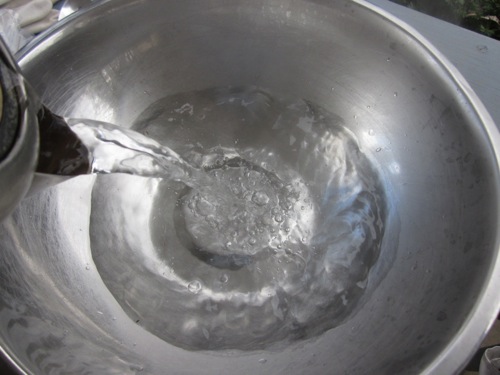
2. Stir in the dye. I used 4-6 tsp. liquid Royal Blue, and a sprinkle of the powdered Teal dye. Add salt if you are using salt.
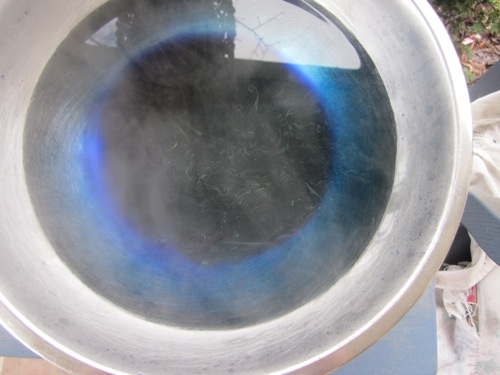
3. Stir well, until any powdered dye is dissolved. NOTE: Keep paper towels handy. Dye will clean up if it's wiped up immediately after a splash or spill, but otherwise it will stain. Be very careful not to get any on your clothes.
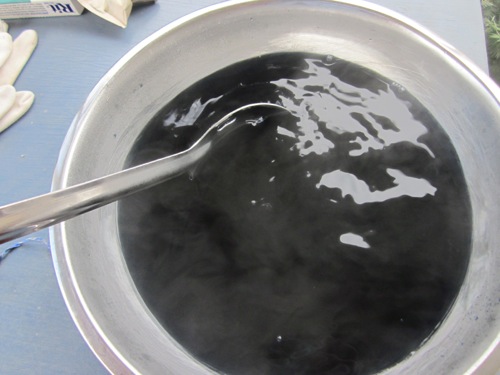
4. Put in the gloves. You can dampen them first or put them in dry.
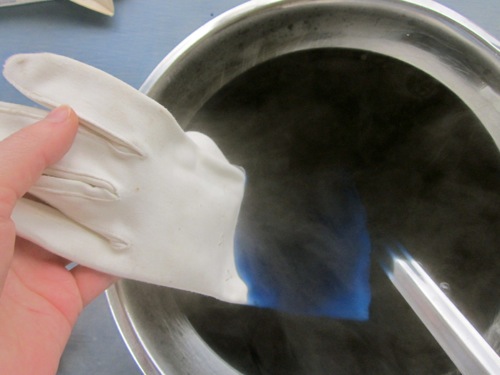
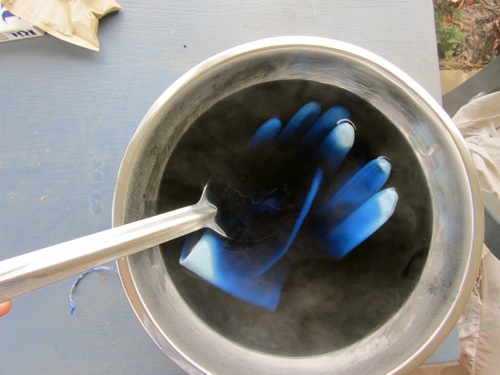
You'll want to stir it pretty much constantly.
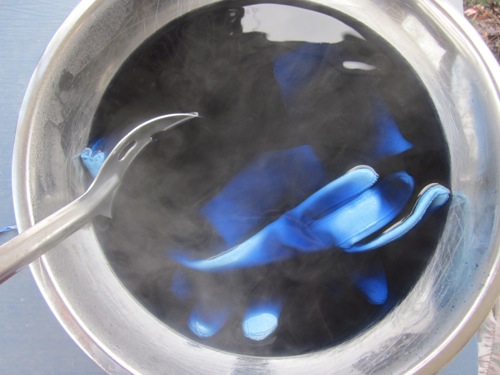
After about 2 minutes it looked like this. This was close to the color I wanted it to be when dry, so I put it back in and stirred more.
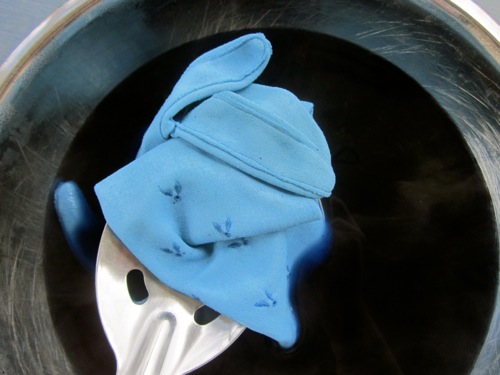
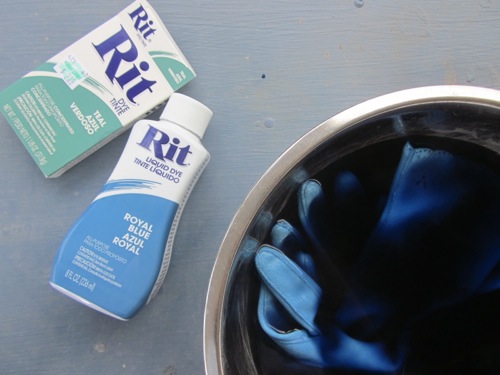
Keep in mind that lighter colors will not be so dark when wet as dark colors. Dark green, for instance, will look black when it's wet. Dark gray will look purple when wet. But these didn't change much from wet to dry because of the lighter shade.
See how nicely the dye colors the fingers where there were stains?
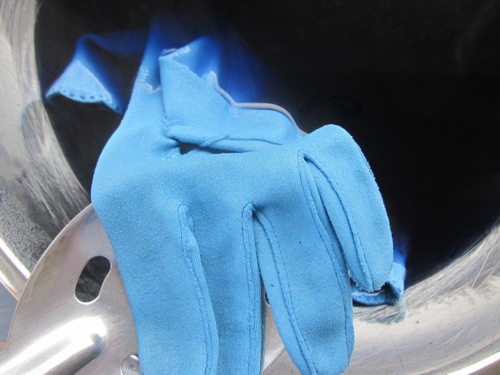
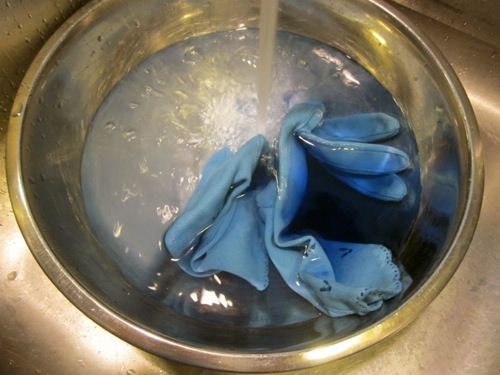
5. When you think they are done (mine were in about 5 min.) carefully drain the water down the stainless steel sink and start the rinsing process.
I didn't have a rubber glove, so I used a plastic bag over my hand secured with a rubber band, which worked fine.
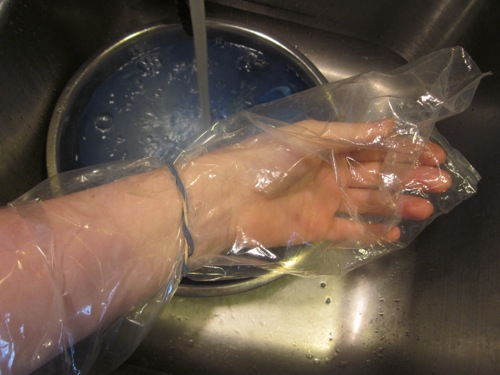
Rinse under warm water until the water runs clear. This will not take as long with a light color as it will with a dark one. Then run it under cold water and squeeze out.
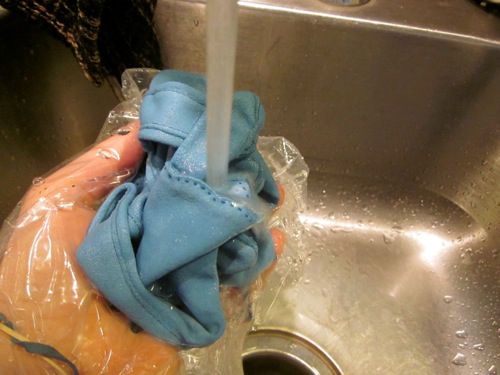
6. Dry completely. I usually put mine on a sock ring overnight.
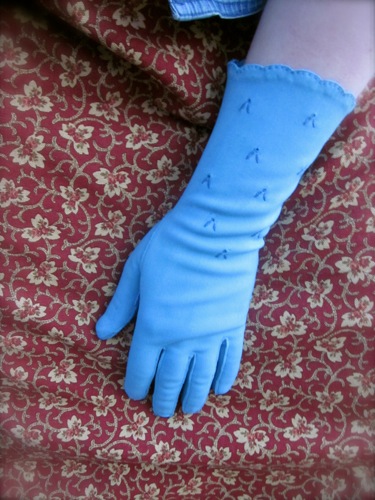
Here are my lovely pair of brand new gloves with a brand new life!
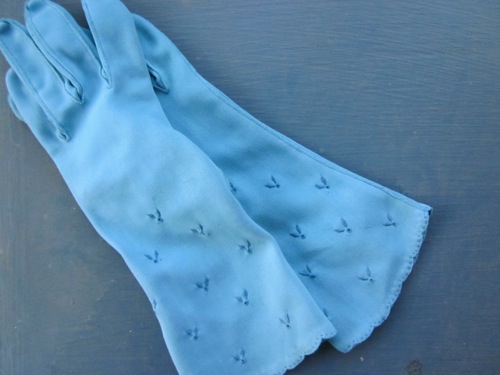
I love how the stitching dyed darker than the gloves.
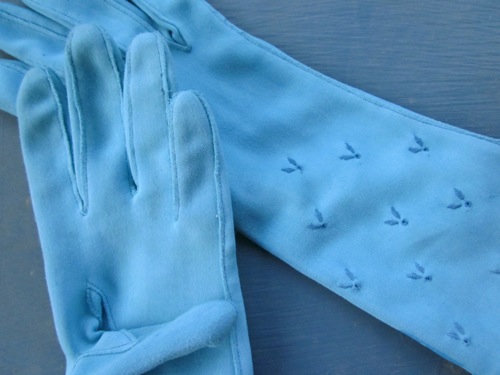
They are the perfect shade for spring and summer!
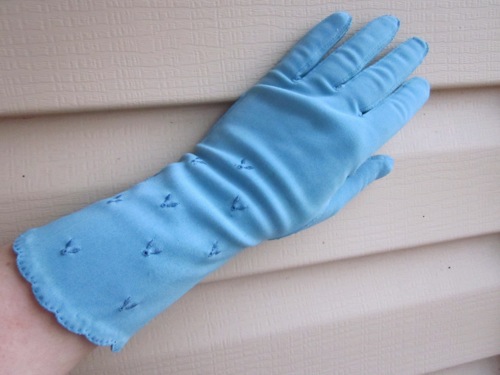
I'm very happy with them, and glad that the color turned out pretty much how I wanted.
Dyeing Other Things
Dyeing is great for more than gloves.
This ivory cotton clutch was very stained and I needed a red one, so I happily dyed it.
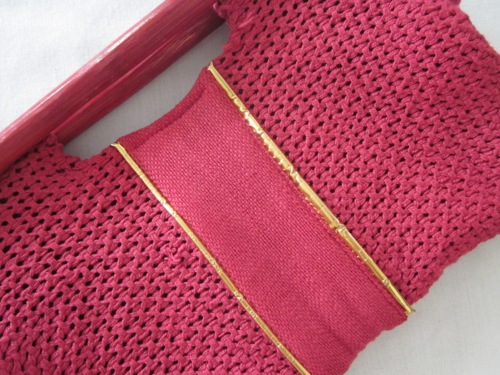
The dark spots were stains. But they are much less noticable now. Even the wood handles dyed!
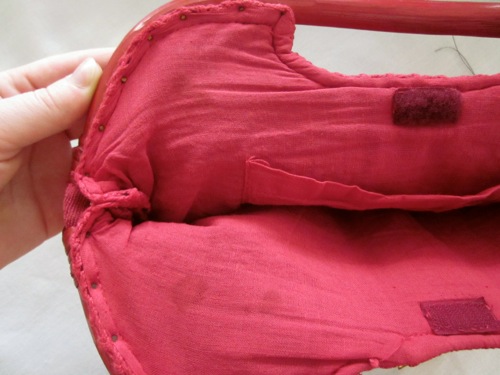
I dyed this purse in a sink along with a cloth hat and pair of gauntlets, so I even have a matching accessory set now.
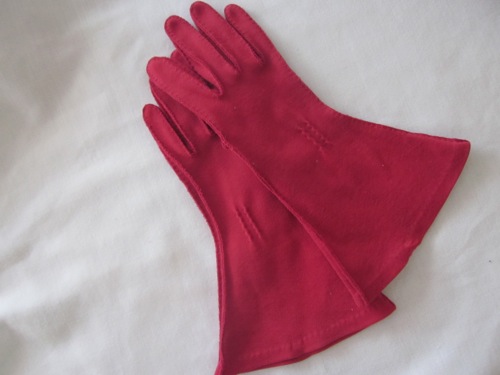
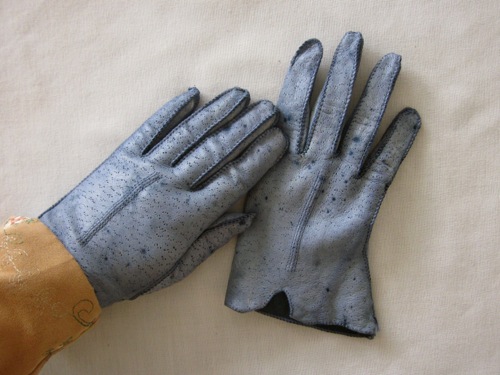
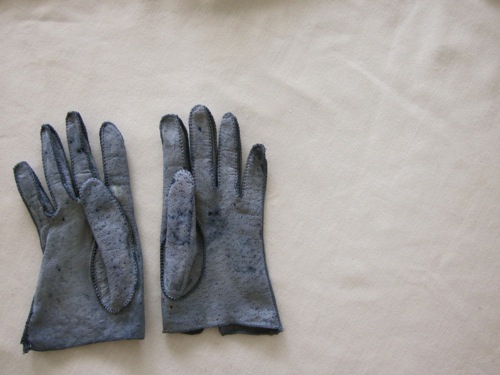
I did try a pair of leather gloves. They took the dye but didn't dye evenly, and the leather shrank. I like the distressed look from the dye, but won't dye anything leather that is special to me.
I do not recommend dyeing hats that have stiff shaping like buckram, since it will need reshaped. I tried this one:
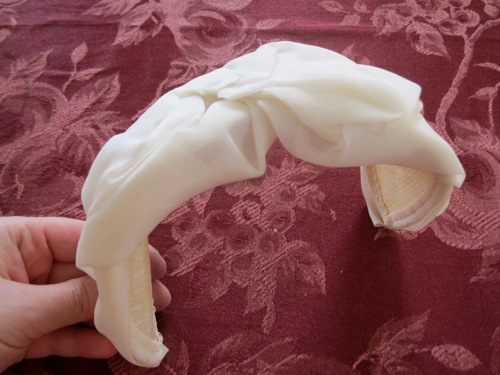
Not only did the buckram get sticky and need reshaped, but the old glue that held the gauze pieces on fell apart.
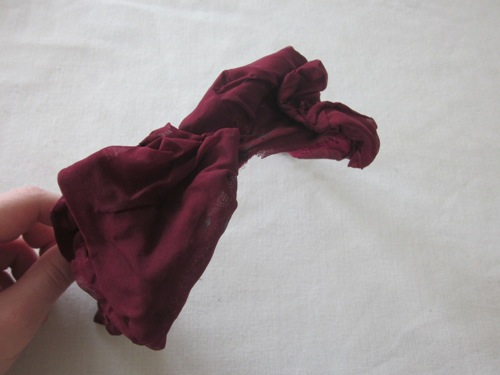
But not to despair…with a glue gun, some glass pearls, and some ivory paper flowers, I repaired the damages and hid the rough parts.
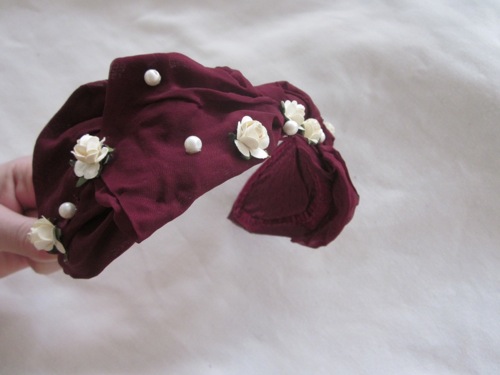
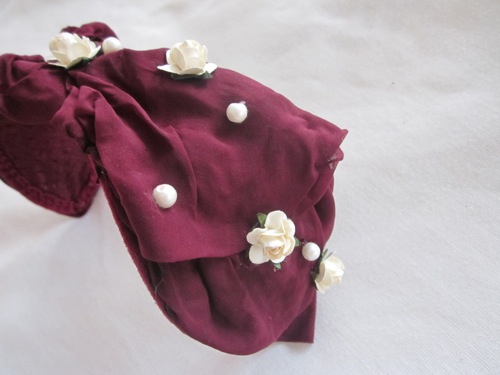
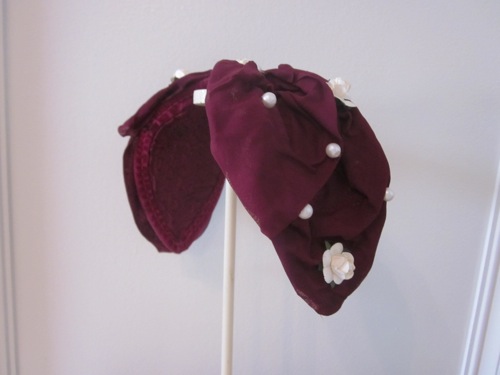
But just the same, I'll stick to fabric hats from now on.
You never know until you try! But it's best to experiment on inexpensive non-heirloom items.
The possibilities and inspiration are endless. I hope you have as much fun as I do!
Till next week with Part Three,
~Kristen – Verity Vintage Studio

 Verity Vintage Studio
Leave a comment